Why the Right Vise Choice Can Simplify CNC Process Control
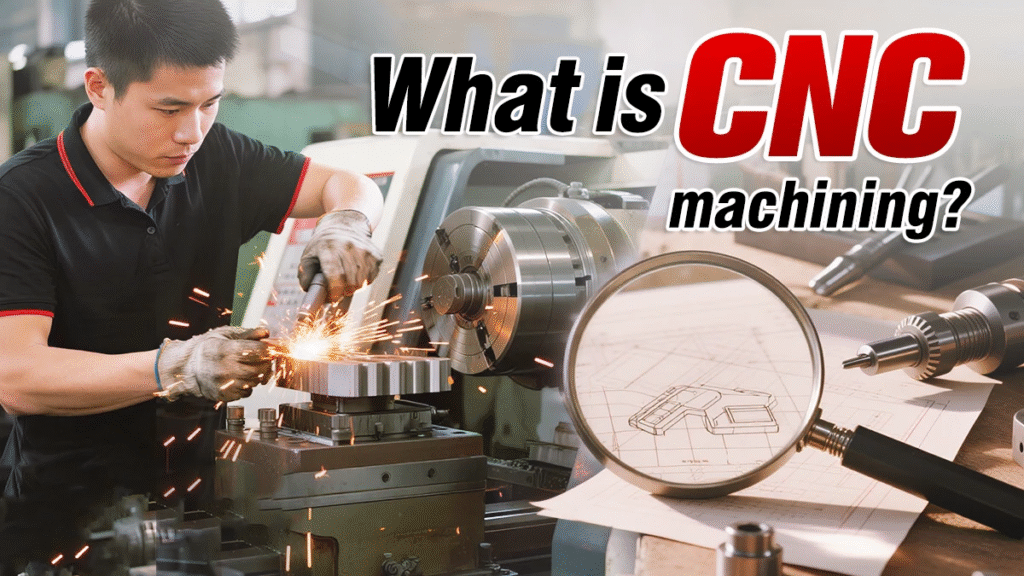
Process control is one of the most important goals in modern machining. Whether a shop is producing small batches, repeat orders, or highly precise components, success depends on the ability to keep the machining process stable from start to finish. Tooling, machine condition, programming, and inspection all play important roles, but one area that often has a larger impact than expected is workholding.
A vise may appear to be a simple mechanical tool, yet it influences many of the variables that affect machining consistency. It determines how the part is positioned, how stable it remains under load, how easily features can be reached, and how repeatably the same setup can be recreated. When the vise is poorly matched to the application, process control becomes harder. When it is selected correctly, many shop-floor problems become easier to manage from the beginning.
Process Control Starts with a Stable Reference
Before the machine cuts anything, the process already depends on one basic requirement: the part must begin in the correct position. If that starting point is inconsistent, then everything that follows becomes harder to control. Dimensions may drift, features may not align as expected, and operators may have to spend more time checking and correcting the setup.
A high-quality cnc vise helps simplify process control by creating a more stable reference condition. Instead of requiring constant manual adjustment, it supports a more predictable part position from the outset. This allows the machine, the tooling, and the program to operate from a more dependable foundation.
In practical terms, that means less uncertainty in the process and fewer surprises during machining or inspection.
Repeatable Loading Makes Results Easier to Standardize
One of the biggest challenges in CNC production is ensuring that different operators, shifts, or batches can produce the same results. This is where repeatability becomes essential. If the part can be loaded in a consistent way each time, the process becomes easier to standardize. Setup instructions become more reliable, offsets remain more stable, and the amount of operator-dependent variation is reduced.
That is why many manufacturers pay close attention to the repeatability of their cnc vise setup instead of focusing only on clamping force or size. In a real production environment, repeatability often has a greater effect on daily consistency than maximum holding power alone.
A more repeatable setup helps simplify process control because it reduces the number of variables that change from job to job. The fewer variables the shop must manage, the easier it becomes to maintain quality.
Better Access Helps Reduce Process Complexity
Another hidden source of process instability is excessive setup count. Every time a part is removed and repositioned, additional complexity is introduced into the workflow. The operator must re-establish location, confirm alignment, and ensure that all critical features still maintain the correct relationship to one another. Each extra setup adds risk.
A dedicated 5 axis vise can help simplify the process by allowing more of the part to be machined in a single setup. Because it improves access around the workpiece, it reduces the need for unnecessary repositioning and allows the machine to perform more operations without interruption.
From a process-control perspective, this is extremely valuable. Fewer setups mean fewer transitions, fewer reference changes, and fewer opportunities for variation to enter the system.
Stronger Clamping Improves Cutting Stability
Process control does not stop at setup. The workholding system must also maintain stability during cutting. If the part shifts, vibrates, or behaves inconsistently under load, even a well-planned machining process can become difficult to manage. This can lead to surface finish problems, dimensional variation, or tool-life instability.
A properly selected cnc vise helps reduce those issues by creating a more rigid and dependable support condition. When the part remains stable throughout the machining cycle, the cutting process becomes easier to predict and easier to repeat.
For shops that machine harder materials or higher-value parts, this level of stability is especially important because the cost of variation is higher.
Simpler Setups Make Training and Execution Easier
Another reason the right vise simplifies process control is that it makes the setup easier to understand and repeat. A good workholding method should not depend too heavily on individual improvisation. It should help the operator follow a clear and repeatable routine.
When the setup logic is simpler, training becomes easier and execution becomes more consistent. Different machinists can achieve similar results because the process depends more on controlled workholding than on personal adjustment habits. Over time, this creates a more stable production environment and reduces variation caused by human factors.
A specialized 5 axis vise or a better-matched cnc vise can therefore support not only better machining, but also better process discipline across the shop.
The Right Vise Helps Reduce Hidden Process Waste
Many shops think of process control mainly in terms of inspection or quality systems, but a large part of process control is simply reducing hidden waste. Extra setup checks, offset corrections, repeated clamping steps, and troubleshooting unstable setups all consume time and weaken process consistency. These problems are often accepted as normal, even though they may be caused by unsuitable workholding.
The right vise helps reduce that waste by making the process more predictable. It shortens setup logic, improves loading consistency, and supports better cutting stability. Those gains are valuable because they simplify the daily work of running production without sacrificing quality.
In competitive manufacturing, a simpler and more stable process is often a more profitable one.
Conclusion
The right vise does much more than hold a part in place. It helps define the stability, repeatability, and simplicity of the machining process itself. When the workholding system is chosen carefully, process control becomes easier because fewer variables need to be managed at every stage of production.
For shops that want stronger consistency and better daily execution, workholding deserves more attention at the planning stage. A reliable 5 axis vise or cnc vise can help simplify both the setup and the process that follows. In the end, better control often begins with a better foundation.