How MIM Parts Are Shaping the Future of Automotive Components
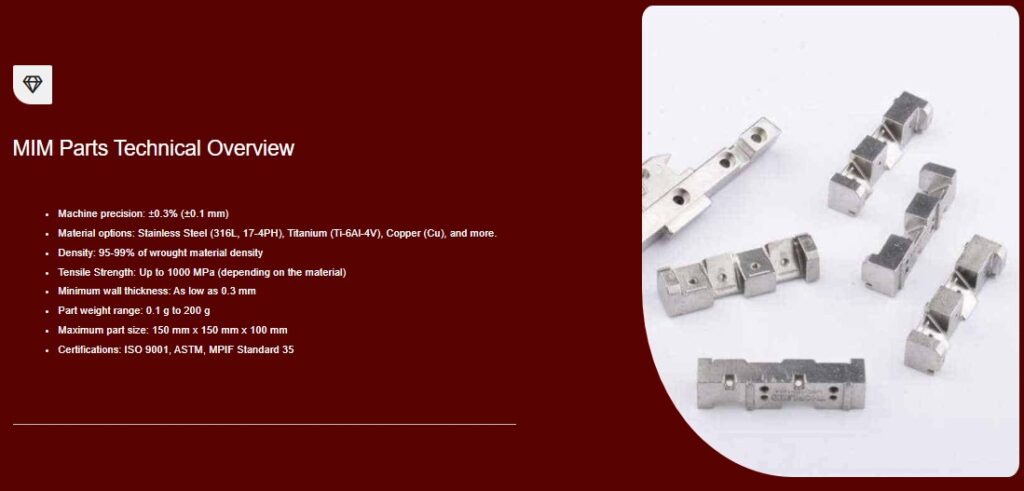
The automotive industry has always been a hub of innovation, constantly evolving to meet the demands of performance, efficiency, and sustainability. As vehicles become more complex, the components that make them function must also advance. One area experiencing remarkable growth and transformation is the manufacturing of small, intricate parts, where MIM parts—Metal Injection Molding components—are poised to play a pivotal role.
Advancements Driving Automotive Component Innovation
The shift toward electric vehicles (EVs), autonomous driving, and lightweight design has placed enormous pressure on automotive engineers to rethink traditional component manufacturing. Metal parts that were once produced using conventional methods such as machining or casting now face challenges related to precision, cost, and material waste. This is where MIM parts step in as a solution, offering high-volume production of complex geometries with minimal post-processing.
Metal Injection Molding combines the flexibility of plastic injection molding with the strength and durability of metal, enabling the creation of components that were previously impossible or uneconomical to produce. The ability to use a wide range of alloys, including stainless steel, titanium, and nickel-based materials, ensures that these parts meet the high-performance standards required in modern vehicles.
The Benefits of MIM Parts in Automotive Applications
One of the most compelling advantages of MIM parts is their design flexibility. Automotive components often require intricate shapes, undercuts, and hollow sections, which can be difficult to achieve with traditional manufacturing. MIM allows manufacturers to produce these complex forms in a single step, reducing assembly requirements and potential points of failure.
Weight reduction is another significant benefit. Vehicles today demand lightweight components to improve fuel efficiency and extend the range of electric vehicles. MIM enables the production of small yet strong metal parts that contribute to overall weight savings without compromising structural integrity. This is particularly important in areas such as engine components, transmission parts, and chassis hardware.
Cost efficiency also plays a critical role in the adoption of MIM parts. While the initial tooling and setup costs may be higher than conventional methods, the ability to produce thousands of identical components with minimal waste quickly offsets the investment. This makes MIM parts an attractive option for high-volume automotive applications, where both precision and scalability are required.
Key Automotive Components Benefiting from MIM
Several types of automotive parts have already begun leveraging the advantages of MIM parts. Engine components such as fuel injector nozzles, turbocharger vanes, and valve guides benefit from MIM’s precision and material properties. These parts must withstand high temperatures, pressures, and mechanical stress, making traditional manufacturing methods both time-consuming and costly.
Transmission components also see considerable benefits. Small gears, shift forks, and synchronizer parts produced using MIM provide exceptional strength while maintaining tight tolerances. This improves performance and reduces the need for complex post-machining processes, ultimately lowering production costs and lead times.
Suspension and braking systems can also take advantage of MIM technology. Components like bushings, clips, and small brackets require precise dimensions and consistent material properties to ensure safety and reliability. The repeatability of Metal Injection Molding ensures that each part meets rigorous automotive standards.
Sustainability and Efficiency in Manufacturing
As the automotive industry faces increasing pressure to adopt sustainable practices, MIM parts offer significant environmental advantages. Metal Injection Molding produces very little scrap compared to machining, where up to 70% of raw material can be wasted. The ability to recycle feedstock and minimize energy-intensive processes makes MIM a more sustainable manufacturing choice.
Additionally, MIM contributes to efficiency in the supply chain. By consolidating multiple components into a single molded part, manufacturers can reduce assembly steps, lower inventory requirements, and simplify logistics. This streamlining reduces both operational costs and environmental impact, aligning with the automotive industry’s long-term sustainability goals.
Challenges and Opportunities for Growth
While the benefits of MIM parts are clear, there are challenges to widespread adoption. Initial setup costs for molds and feedstock preparation can be high, which may discourage smaller manufacturers. However, as demand for precision metal components grows and technology improves, these barriers are gradually decreasing.
Material limitations have also historically been a concern. Certain high-strength alloys or corrosion-resistant materials were difficult to process using MIM. Recent advancements in feedstock technology and sintering processes are now expanding the range of materials available, opening new possibilities for critical automotive applications.
The integration of MIM parts with other emerging technologies, such as additive manufacturing, presents exciting opportunities. Combining 3D printing with MIM can enable hybrid production approaches, allowing for even greater design freedom and rapid prototyping without sacrificing the durability of metal components.
The Role of MIM in Electric and Autonomous Vehicles
The rise of electric and autonomous vehicles has accelerated the need for innovative components that are both lightweight and reliable. Electric powertrains, battery systems, and control modules often require compact metal parts that can handle electrical, thermal, and mechanical stresses. MIM parts are ideally suited for these applications due to their precision and adaptability.
Autonomous vehicles, with their intricate sensor arrays and sophisticated mechanical systems, also benefit from MIM technology. Components such as motor housings, gear assemblies, and fastening hardware can be manufactured with exacting tolerances, ensuring safety and performance in complex automated systems.
Future Trends and Predictions
Looking ahead, the adoption of MIM parts in the automotive industry is expected to grow steadily. As manufacturers continue to prioritize efficiency, sustainability, and high performance, the demand for small, intricate metal components will increase. Continuous improvements in MIM technology, such as faster sintering cycles, enhanced feedstock formulations, and integration with digital manufacturing tools, will further solidify its role in automotive innovation.
Moreover, as global regulations tighten around emissions and material usage, the ability of MIM to reduce waste and enable lightweighting will become even more valuable. The convergence of cost efficiency, performance, and environmental responsibility positions MIM parts as a critical element of the automotive supply chain for decades to come.
Conclusion
The future of automotive components is being reshaped by advanced manufacturing techniques that emphasize precision, efficiency, and sustainability. Among these, Metal Injection Molding stands out as a transformative technology. MIM parts offer unmatched design flexibility, strength, and repeatability, making them ideal for the demands of modern vehicles, from traditional engines to electric and autonomous systems.
As the automotive landscape continues to evolve, manufacturers who embrace MIM technology will be better positioned to meet performance requirements, reduce environmental impact, and remain competitive in a rapidly changing market. The era of small, intricate, high-performance metal components has arrived, and MIM parts are leading the way.