Essential Trade Spend Management Insights for Better Profitability
Trade spend management has become one of the most critical financial levers for consumer goods and retail-driven businesses. In a highly competitive marketplace, companies are no longer judged only by how much they sell, but by how efficiently they manage promotional investments with retailers. Poorly controlled trade spend can quietly erode margins, while optimized strategies can significantly improve profitability and growth.
This article explores essential trade spend management insights that help businesses move from reactive cost control to strategic profit optimization.
Understanding Trade Spend and Its Impact on Profitability
Trade spend refers to the financial incentives brands provide to retailers and distributors to promote, display, or discount products. These incentives include rebates, discounts, allowances, and promotional funding designed to increase product visibility and sales volume.
However, trade spend is not just a marketing cost—it is a major profit driver or profit drain depending on how it is managed. In many consumer packaged goods (CPG) businesses, it represents a significant portion of revenue and can heavily influence the bottom line if not properly controlled. Studies show it is often one of the largest expenses after production costs, making it a key focus area for profitability improvement .
The real challenge lies in ensuring that every dollar spent delivers measurable returns rather than unnecessary margin leakage.
Why Traditional Trade Spend Approaches Fail
Many companies still rely on outdated systems such as spreadsheets, manual tracking, and disconnected data sources. This creates a fragmented view of trade spend and leads to poor decision-making.
One major issue is lack of visibility. Trade spend data is often scattered across finance, marketing, and sales systems, making it difficult to understand where money is going and whether it is working effectively .
Other common problems include:
- Over-discounting without understanding ROI
- Poor tracking of deductions and rebates
- Weak integration between promotion planning and financial reporting
- Delayed or inaccurate reconciliation of trade promotions
These inefficiencies result in hidden costs and margin erosion that directly impact profitability.
Key Insights for Effective Trade Spend Management
To improve profitability, businesses need to adopt a more structured and data-driven approach to trade spend. The following insights are essential for success.
Shift from Cost Control to Investment Thinking
Instead of treating trade spend as a fixed marketing expense, companies should view it as an investment portfolio. Every promotional activity should be evaluated based on expected return, not just volume growth.
This shift helps organizations prioritize high-performing promotions and eliminate wasteful spending that does not contribute to long-term value.
Improve Visibility Across All Trade Spend Activities
A complete and transparent view of trade spend is essential for profitability optimization. Businesses must integrate all promotional data, including:
- Retailer agreements
- Discount structures
- Deductions and claims
- Promotional performance metrics
When visibility improves, decision-makers can quickly identify inefficiencies and reallocate budgets toward more profitable channels.
Leveraging Trade Spend Analytics for Better Decisions
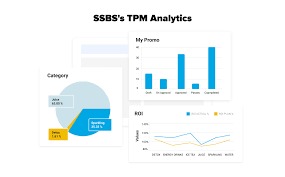
Data analytics is transforming trade spend management by replacing assumptions with measurable insights. Advanced analytics helps businesses evaluate which promotions actually drive incremental sales and which simply reduce margins.
With proper trade spend analytics, companies can:
- Identify high-ROI promotions
- Detect leakage and overpayments
- Compare retailer performance
- Optimize promotional timing and depth
Trade spend effectiveness improves when decisions are backed by real performance data instead of intuition. Effective trade spend strategies ensure that every dollar spent contributes to both short-term sales and long-term profitability .
Strengthening Deduction and Reconciliation Processes
One of the biggest hidden profit drains in trade spend management is inaccurate or unmanaged deductions. These include chargebacks, rebates, and disputed promotional claims from retailers.
Without proper control, companies often lose significant revenue due to:
- Duplicate or invalid deductions
- Missing documentation
- Delayed claim processing
- Manual reconciliation errors
Strengthening deduction management ensures that companies only pay what is truly owed and recover revenue that would otherwise be lost.
Aligning Trade Spend with Business Strategy
Trade spend should always support broader business goals such as market expansion, brand positioning, and customer acquisition. Misalignment between trade promotions and strategic objectives leads to inefficient spending and low ROI.
For example, investing heavily in low-performing channels or non-strategic promotions can drain resources that could be better used elsewhere. Aligning trade spend with strategic priorities ensures that promotional dollars directly contribute to long-term profitability.
Using Technology to Automate and Optimize Trade Spend
Modern trade spend management requires more than manual tracking tools. Businesses are increasingly adopting integrated platforms that connect finance, sales, and supply chain data in real time.
Technology enables:
- Automated tracking of promotional performance
- Real-time budget monitoring
- Predictive forecasting of trade spend outcomes
- Faster reconciliation of deductions and claims
These tools reduce human error, improve efficiency, and allow businesses to make faster, more informed decisions.
Improving ROI Through Continuous Trade Spend Optimization
Trade spend management is not a one-time activity—it requires continuous monitoring and optimization. Companies must regularly evaluate the effectiveness of promotions and adjust strategies based on results.
Key optimization practices include:
- Reviewing historical promotion performance
- Eliminating low-performing campaigns
- Reinforcing high-return promotional strategies
- Benchmarking against industry standards
This ongoing optimization ensures that trade spend evolves with market conditions and continues to deliver value over time.
Conclusion
Effective trade spend management is essential for improving profitability in today’s competitive business environment. Companies that rely on outdated systems or guesswork often experience hidden margin loss and inefficient spending. However, those that adopt a data-driven, strategic approach can transform trade spend into a powerful growth engine.
By improving visibility, leveraging analytics, strengthening deduction controls, and aligning spend with business strategy, organizations can significantly enhance profitability. Ultimately, trade spend is not just an expense—it is a strategic investment that, when managed correctly, drives sustainable financial success.