Understanding Displacer Level Sensors: Working Principle, Uses, and Performance Benefits
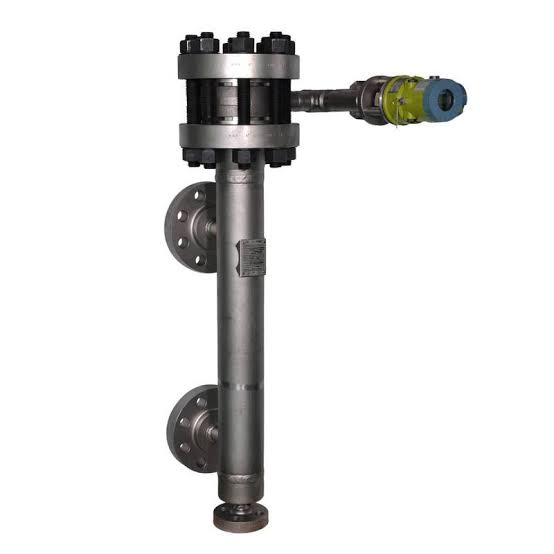
A Displacer Level Sensor is a reliable industrial instrument used to measure the level of liquids in tanks, vessels, and process equipment. It operates using the principle of buoyancy, detecting changes in the apparent weight of a displacer as the liquid Displacer Level Sensor level rises or falls. Because of its simple operating concept, durability, and suitability for demanding environments, this type of sensor is widely used across industries such as oil and gas, chemical processing, power generation, water treatment, and manufacturing.
Understanding how a Displacer Level Sensor works, where it is used, and what advantages it offers can help engineers and plant operators choose the right level measurement technology for their processes.
What Is a Displacer Level Sensor?
A Displacer Level Sensor is a level-measuring device that uses a specially designed object called a displacer. The displacer is usually a cylindrical or elongated metal body positioned inside a tank or chamber. When the displacer is partially or completely immersed in liquid, it experiences an upward buoyant force.
The amount of the displacer submerged in the liquid changes as the level changes. This causes a corresponding change in the apparent weight of the displacer. The sensor detects this change and converts it into a level measurement or control signal.
Unlike simple float-based instruments, displacer systems can provide dependable measurement in industrial applications where pressure, temperature, or process conditions may make other measurement methods less suitable.
Working Principle of a Displacer Level Sensor
The operation of a Displacer Level Sensor is based primarily on Archimedes’ principle. According to this principle, an object immersed in a liquid experiences an upward force equal to the weight of the liquid displaced by the object.
Inside the process vessel, the displacer is suspended from a torque tube, spring mechanism, or similar sensing arrangement. As the liquid level rises, more of the displacer becomes submerged. The increased buoyancy reduces the apparent weight acting on the sensing mechanism.
When the liquid level decreases, less of the displacer is submerged. The buoyant force decreases, causing the apparent weight to increase.
The sensor measures these mechanical changes and translates them into a usable output. Depending on the instrument design, the output may be a pneumatic signal, electrical signal, or digital communication signal that can be connected to a control system.
Main Components of a Displacer Level Sensor
A typical Displacer Level Sensor contains several important components that work together to produce accurate measurements.
The displacer is the main sensing element and is designed according to the density and characteristics of the process liquid. The torque tube or mechanical sensing mechanism detects changes in the apparent weight of the displacer.
A transmitter converts the mechanical movement into an electrical or digital output. The sensor may also include a housing, process connections, calibration mechanism, and control interface.
Proper selection of the displacer size, material, and length is essential for achieving dependable performance under specific operating conditions.
Applications of Displacer Level Sensors
Displacer level instruments are commonly used in industries where accurate and dependable liquid-level measurement is important.
Oil and Gas Industry
Oil refineries, storage facilities, and petrochemical plants use displacer instruments for monitoring liquid levels in process vessels and separators. Their ability to operate under pressure and temperature variations makes them useful for demanding hydrocarbon applications.
Chemical Processing
Chemical plants often handle corrosive, dense, or volatile liquids. With appropriate construction materials, displacer sensors can be used for monitoring process vessels, storage tanks, and chemical mixtures.
Power Generation
Power plants require reliable level measurement for boilers, condensers, feedwater systems, and other process equipment. Displacer technology can be suitable for applications where changing pressure and temperature conditions must be considered.
Water and Wastewater Treatment
Water treatment facilities use level instruments to monitor tanks, reservoirs, and process vessels. Displacer systems can provide continuous information that helps operators maintain appropriate liquid levels.
Manufacturing and Processing
Industrial manufacturing facilities may use these sensors for monitoring oils, solvents, chemicals, and other process liquids. They can also support automated control systems by providing continuous level information.
Benefits of Displacer Level Sensors
One of the main advantages of a Displacer Level Sensor is its reliable mechanical operating principle. Because measurement is based on buoyancy and apparent weight, the technology can perform effectively in many industrial environments.
Another benefit is its versatility. These sensors can be designed for different vessel sizes, liquid densities, pressures, and temperatures. With suitable materials and configurations, they can accommodate demanding process conditions.
Continuous level measurement is another important advantage. Instead of simply indicating whether a liquid has reached a particular point, many displacer systems provide continuous level information that can be integrated with plant control systems.
Displacer sensors can also provide stable performance when properly installed and calibrated. Their robust construction makes them suitable for industrial applications where equipment may be exposed to challenging operating conditions.
Factors to Consider When Selecting a Displacer Level Sensor
Several factors should be evaluated before choosing a sensor. Process liquid density is particularly important because buoyancy depends directly on the density of the liquid. Changes in density can influence measurement accuracy.
Operating temperature and pressure should also be considered. The sensor materials must be compatible with the process fluid and environmental conditions.
The required measurement range, vessel dimensions, installation arrangement, and output signal should also be reviewed. In addition, maintenance requirements and calibration procedures should be considered when comparing different level measurement technologies.
Maintenance and Installation Considerations
Correct installation plays an important role in the performance of a Displacer Level Sensor. The displacer should be installed where it can move freely without contacting vessel walls or internal equipment.
Regular inspection and calibration can help maintain measurement accuracy. Operators should also check process connections, mechanical components, and signal transmission systems as part of routine maintenance.
If the process liquid contains deposits or materials that can accumulate on the displacer, cleaning may be necessary. Following the manufacturer’s installation and maintenance recommendations can significantly improve instrument reliability.
Conclusion
A Displacer Level Sensor provides a practical and dependable method for measuring liquid levels in a wide range of industrial applications. By using buoyancy and changes in apparent weight, it can deliver continuous level information while operating under challenging process conditions.
Its applications extend across oil and gas, chemical processing, power generation, water treatment, and manufacturing. When properly selected, installed, and maintained, a displacer instrument can offer reliable measurement, strong durability, and easy integration with industrial control systems.
For facilities that require dependable liquid-level monitoring, understanding the working principle and selection factors of displacer technology can help ensure safer, more efficient, and better-controlled operations.
